
Resolving the cryptic identity of cocoa pollinators – new paper in Basic and Applied Ecology
Since I started the lab at VUB, we have done a number of projects in the tropics looking at small aquatic habitats such as bromeliads and the ecological dynamics of the biota they contain. It did not escape my attention that these habitats were also used by the same types of midges known to be involved in the pollination of cacao. However, to my surprise at the time, the identity of cocoa pollinators was quite controversial. Work from the 80s and 70s identified midges from the genus Forcipomyia as the main pollinators. However, more recent studies reviewed by Toledo-Hernandez and coworkers (2017) reported a much larger diversity of cocoa flower visitors. To resolve this paradox, we believed it was necessary to introduce stricter criteria to define pollinators. It led to the conception of the Barcoding for Chocolate (BFC) project in our lab, pioneered by PhD student Mathil Vandromme. In her doctorate, she carefully caught flower visitors on cocoa flowers in Nicaragua and noted the behavior of the individuals. This way, we could distinguish taxa that just hung around or rested on the flowers from those that entered the petal hoods and came into contact with pollen. These individuals were sequenced for the COI barcoding gene so we could confirm what they were. But Mathil went another step further: she also sequenced small flies that emerged from different potential larval habitats (rotting cacao husks, banana pseudostems, leaf litter, bromeliads). This way, we can pinpoint where the pollinators breed! The first results of this project are now published in a paper in Basic and Applied Ecology.
https://www.sciencedirect.com/science/article/pii/S1439179123000099
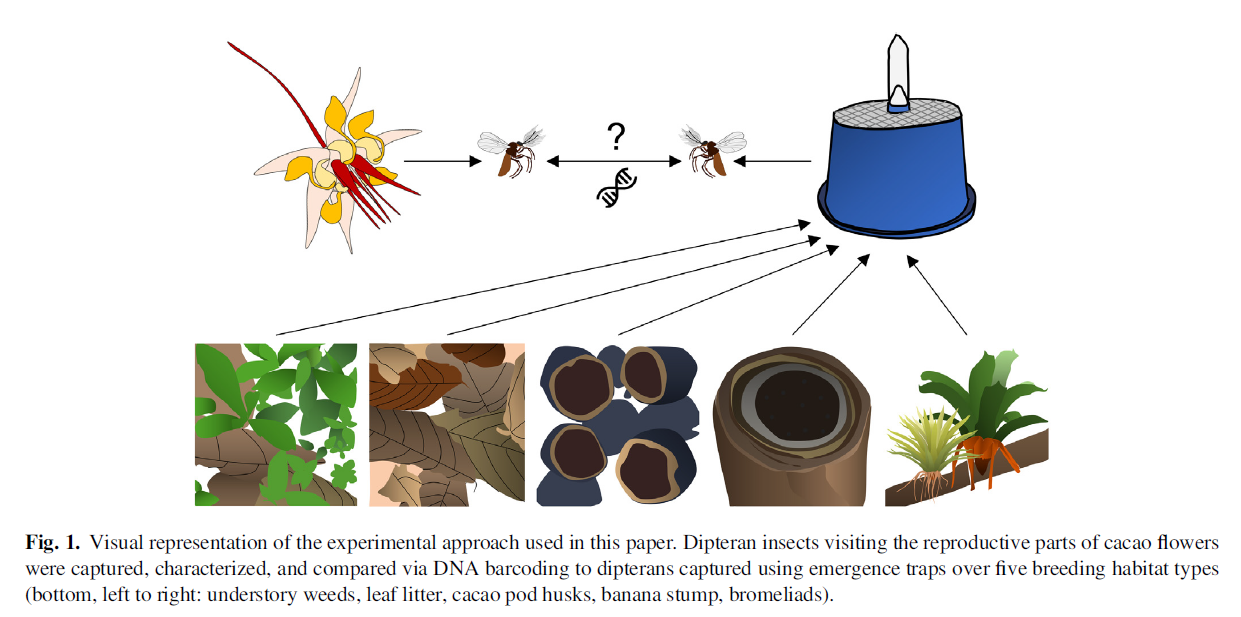
In the meantime, a lot has happened. With Eliza Van de Sande, a new PhD project was started, and a number of dedicated students (Fanny Kratz, Sara Vroman) brought back new pollinator samples from Peru, French Guiana, Malaysia, and Côte d’Ivoire. All flower visitors are now also investigated for pollen adherence, too, so we are getting closer to a definitive list of pollinators. Soon we will get a better idea of the diversity of cocoa pollinators globally. For now, the pilot results from Nicaragua clearly point at biting midges and several potential breeding habitats for cocoa pollinators, but the links found in the paper have to be confirmed at much larger scales in more plantations and in different cocoa breeding areas in the world to generate conclusive evidence of which breeding habitats might be promoted through management to improve pollination.


 Community Ecology Lab